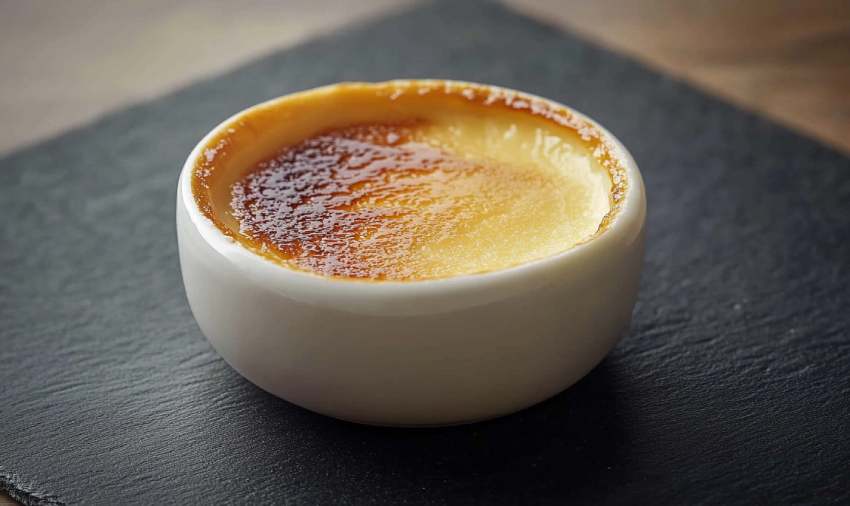
Egg custard, a dessert that is both simple and comforting, has its roots in traditional French cuisine. This classic treat, often associated with childhood and homemade recipes, is loved for its delicate sweetness and smooth, creamy texture. Made with everyday ingredients—eggs, milk, and sugar—it embodies simplicity and authenticity.
Perfect for ending a meal on a sweet note, this dessert can be prepared in individual ramekins or in a larger family-style dish. Discover how to make this timeless dessert in just a few easy steps.

Egg Custard
Ingredients
- 4 cups 1 liter milk
- 5 eggs
- ⅔ cup 140 g sugar
- 1 vanilla bean
- 2 packets vanilla sugar or 2 tsp vanilla sugar
- 1 pinch salt optional
Instructions
Prepare the flavored milk
- Pour the milk into a saucepan.
- Split the vanilla bean lengthwise and scrape out the seeds with the tip of a knife. Add both the seeds and the pod to the milk, along with the sugar and vanilla sugar.
- Heat gently until the milk just begins to simmer. Remove from heat and let it steep for 5 minutes.
Prepare the eggs
- While the milk is infusing, crack the eggs into a large bowl.
- Add a pinch of salt if desired, then lightly whisk until smooth and combined.
Combine the milk and eggs
- Strain the milk through a fine sieve to remove the vanilla pod and any residue.
- Slowly pour the warm milk over the beaten eggs, whisking constantly to prevent the eggs from curdling.
Prepare the baking dish
- Lightly butter a baking dish or individual ramekins.
- Gently pour the mixture into the dish(es), leaving a little space at the top.
Bake
- Place the dish(es) in a larger pan filled with hot water (water bath).
- Place in a cold oven, then set the temperature to 250°F (120°C) and bake for 20 minutes.
- Increase the temperature to 350°F (180°C) and bake for an additional 10 minutes.
- Finish with 5 minutes at 410°F (210°C) to achieve a light golden color.
Cool
- Once baked, remove the custards from the oven and let them cool at room temperature.
- Then refrigerate for at least 2 hours before serving.
Common Mistakes to Avoid
Overheating the milk
Why it matters: If the milk boils, it can affect both the flavor and the texture, making the custard less smooth.
How to avoid it: Heat the milk gently and remove it from the heat as soon as it starts to simmer.
Pouring the milk too quickly into the eggs
Why it matters: Adding hot milk too fast can cook the eggs instantly, creating lumps and ruining the silky texture.
How to avoid it: Pour the milk slowly while whisking continuously to keep the mixture smooth.
Skipping the straining step
Why it matters: Small bits of cooked egg or vanilla residue can remain, affecting the final texture.
How to avoid it: Always strain the mixture through a fine sieve before baking.
Incorrect water bath (bain-marie)
Why it matters: Without a proper water bath, the custard can cook unevenly and turn rubbery instead of creamy.
How to avoid it: Use hot water and make sure it reaches halfway up the sides of the dish for gentle, even cooking.
Baking at too high a temperature
Why it matters: High heat can cause the custard to curdle or become grainy.
How to avoid it: Follow the gradual temperature increase and avoid rushing the baking process.
Overbaking the custard
Why it matters: Overcooked custard becomes dry and rubbery, losing its delicate texture.
How to avoid it: Remove it from the oven when it’s set but still slightly jiggly in the center.
Not allowing enough chilling time
Why it matters: The custard needs time to fully set and develop its flavor. Skipping this step results in a less firm and less flavorful dessert.
How to avoid it: Chill for at least 2 hours before serving for the best texture and taste.
Ingredient Substitutions & Variations
Milk alternatives
What to use instead: You can replace whole milk with semi-skimmed milk, or use a mix of milk and heavy cream for a richer result. For a dairy-free version, try almond milk, oat milk, or coconut milk.
What changes in the result: Plant-based milks will give a lighter texture and a slightly different flavor, while adding cream makes the custard richer and more indulgent.
Sugar alternatives
What to use instead: Swap regular sugar with brown sugar, honey, maple syrup, or a natural sweetener.
What changes in the result: Brown sugar adds a deeper, caramel-like flavor, while liquid sweeteners bring subtle aromatic notes and a softer sweetness.
Vanilla alternatives
What to use instead: Replace the vanilla bean with vanilla extract, vanilla paste, or try other flavors like cinnamon, cardamom, or tonka bean.
What changes in the result: Each option adds a different aromatic profile, making the dessert more original and personalized.
Egg adjustments
What to use instead: You can slightly reduce the number of eggs for a softer custard, or add an extra yolk for a richer texture.
What changes in the result: Fewer eggs create a more delicate texture, while extra yolks make the custard creamier and more velvety.
Flavor variations
What to use instead: Add citrus zest (lemon or orange), a splash of orange blossom water, or a hint of coffee.
What changes in the result: These additions bring freshness, depth, or a more complex flavor profile to the dessert.
Topping alternatives
What to use instead: Serve with caramel sauce, fruit compote, crushed cookies, or toasted nuts.
What changes in the result: Toppings add texture contrast and elevate the dessert with extra flavor and visual appeal.
Frequently Asked Questions (FAQ)
Can I make egg custard ahead of time?
Yes, and it’s recommended: Preparing it in advance allows the custard to fully set and develop its flavor. It’s best made a few hours ahead or even the day before.
How long does egg custard last in the fridge?
Up to 2–3 days: Store it covered in the refrigerator. After that, the texture may start to change and become less smooth.
Can I freeze egg custard?
Not recommended: Freezing can cause the custard to separate and become watery once thawed, affecting both texture and taste.
Why is my custard not setting properly?
It’s usually a baking issue: This can happen if the temperature is too low, the baking time is too short, or the milk-to-egg ratio is off.
Why does my custard have a grainy texture?
It was likely overcooked: High heat or overbaking can cause the eggs to curdle, resulting in a grainy consistency instead of a smooth one.
Can I make this recipe without a water bath?
It’s not ideal: The water bath ensures gentle, even cooking. Without it, the custard is more likely to become rubbery or overcooked on the edges.
Can I use plant-based milk?
Yes, with some adjustments: Almond, oat, or coconut milk can work, but the texture will be slightly lighter and less creamy than traditional custard.
How do I know when the custard is done?
Look for a slight jiggle: The custard should be set around the edges but still slightly wobbly in the center when you take it out of the oven.
Can I add other flavors to this recipe?
Absolutely: You can add citrus zest, spices like cinnamon or cardamom, or even a touch of caramel for extra flavor.
Storage
Custard can be stored for up to 3 days in the refrigerator in an airtight container. Serve it well chilled for an optimal tasting experience.
My advice for even tastier milk eggs…
For a more exotic twist, add a touch of cinnamon or replace the vanilla with cardamom. You can also incorporate orange or lemon zest for a fresh, slightly tangy note.
If you’re looking for an even richer texture, use whole milk or combine it with a bit of heavy cream. Finally, for a more festive dessert, serve your egg custard with a drizzle of caramel or a crumble of crushed cookies.


